Sermons
Sermons from the Chaplain
“Humans in Creation”
Our Director of Music, Dr Ewan Campbell, developed a special concert on the theme of humans and nature. He and I adapted this for use in the chapel in the form of a vigil service. These are the texts I composed for this.
I was interested in the way one strand of biblical and Christian thinking sees humans as very much just another part of God’s created order. We have our own special role, but so do all the other parts.
“Trust”
Trust seems to be plummeting in our society at this point in our history. Might Christianity have anything to contribute?
I have been persuaded for a long time that the word in the New Testament usually translated as faith would usually be better translated as trust. Might this be a starting point, especially with those who are troubled by the ‘believing’ talk among Christians. Do we not all have some level of trust in life to get through it.
“The history of the Jesus tradition”
Do we have the ipsissima verba of Jesus recorded in the gospels? I very much doubt it, but we do have a method and a theory that can help us assess how the tradition of Jesus’s sayings evolved up to the point they appeared in the synoptic gospels. This looks at a particular passage in Matthew and compares it with parallel texts and hazards some conclusions on what Jesus might have said that is of relevance to today.
This, I fear, was rather too dense for listeners to follow. I hope it will be easier to read, when one can take time and look back and forth between the text and the diagram at the end.
“A walk through the Eucharist”
The choir had worked up Schubert’s Mass in G major for the Easter term in 2025. They sang much of it in the context of a Church of England Mass or Eucharist as well as all of it in a concert. This seemed a great opportunity to explain this central service of the Christian liturgy.
“What might be the tasks of this chapel”
Here I think aloud about what our chapel is all about. I categorise this under the three Transcendentals: beauty, truth and goodness – I am very fond of these Transcendentals as I think they are the most obvious route into thinking about God for those who have not been brought up as churchgoers.
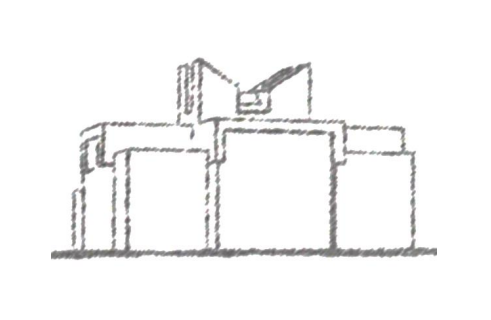
I praise the beauty of the chapel’s architecture and the music that goes on here. I try to justify my style of preaching as seriously Christian, but welcoming to those who disagree and wish to contest it. I speak of the support to mental health by facing up to the massive challenges the world faces ahead.
“Passing on the baton”
This was an attempt to be encouraging in the face of the future. Again, I referred to the Transcendentals, but also dwell on one of the three Theological Virtues, hope – the others being faith and love. “My repeated retort is that hope is a spiritual discipline, not an estimate of probabilities.”
I also quote J. M. Barrie, of Peter Pan fame. He said to students in 1922, “Courage is the thing.”
“The doctrine of the Holy Trinity is mystical not mathematical”
This was the third, though logically/historically the first, in a series of three sermons on the three core doctrines of the Church. From the first, the early Christians somehow thought of Jesus Christ as also God, despite their absolute Jewish commitment to one God. The Holy Spirit also joined in the Godhead, but they were less clear on how.
What possible sense can there be in saying God is both three and one?
I offered two slogans as ways to conceptualise this three-in-one.
The Father, Son and Spirit are the Lover, the Beloved and the Reflector of Love.
The Father, Son and Spirit are the Unimaginable, the Image and the Imagination.
“Jesus God and human, the richness of the Council of Chalcedon”
For rather accidental reasons, the developed understanding of how Jesus was both God and a man, did not get formulated into one of the creeds the Church uses in worship. The Nicene Creed hints at it, but the full development at the Council of Chalcedon is not frequently rehearsed in services. I begin with the text of the council.
It is well established that Jesus reveals the Father to us, but I also claim that he reveals the true nature of the human to us. I explore how the full nature of the Godhead empties itself in order for God the Word to become a human being – Kenosis. But then also explore how the human in each of us becomes taken up in Christ into the Godhead – Theosis.
“If Jesus death is the solution, what is the problem?”
Typically, the Church speaks of Christ dying for our sins and certainly there is a lot of sin and the grief it brings in the world. But by no means all the evil in the world is the result of human sin. Famously, nature is red in tooth and claw. Does the death of Jesus address that? I think it does.
The responsibility for evil reaches back to God the creator and the crucifixion is God accepting the consequences of that responsibility. But more, creation itself is the bringing to be of something out of nothingness. In his death, Christ journeys into the nothingness to bring back life. “It is the self-giving unto death that is the gift of life to creation, and which in turn then reflects back the love that brought it into being. No longer shall we feed on the slaughtered corpses of our fellow creatures, but on the Eucharistic body and blood of Christ, freely and lovingly offered through the sacrifice of his life.”
“Is there a conversation to be had between religion and science, or is it all one way”
As a biologist, it seems self-evident to me that evolution is basically correct, and I adduce some evidence for this. Yet, I also challenge a one-sided emphasis on the metaphor of ‘selfish genes’ and discuss the important role of cooperation in the history of life.
Then I argue that science, illuminating as it is, cannot answer whether there is a god or not. This is quite a common Christian position, but I explore a novel way of explaining this (some listening were not convinced I succeeded). I drew on the methods of anthropology, particularly the distinction of outsider (scientific) and insider points of view. If God is noticed from the insider perspective, it may be as something deeply interior or beckoning from the beyondness. Neither of these views are available to someone studying a culture from outside. Only insiders can debate the significance of them.
“Magnificat and Patriarchy”
The Magnificat is one of the two core gospel canticles sung at every Evensong.
It is the song of Mary, the mother of Jesus, as Luke depicts her response to the greeting from her cousin Elizabeth. It is a triumphant declaration that God is with the poor and humble and not with the rich and proud. It is also a song from a woman. This sermon reflects on a clash between this and the oft-assumed patriarchy of the Bible. In addition to Mary, I examine the stories of Tamar and Ruth from the Hebrew Bible. I argue that the song, while not explicitly critical of patriarchy – that would be anachronistic – it is, nevertheless, knowingly subversive and political.
“The Nunc Dimittis and preparing for death”
The Nunc Dimittis is the other core gospel canticle of Evensong.
This reflection is more personal. How do I use the canticle to prepare myself for my own death?
In addition to its note of graceful submission to the loving will of God, I place it in the context of the narrative. Jesus is recognised by two spiritual people, Simeon and Anna, who have been looking for consolation and redemption in the context of the oppression of the Jewish people by the Romans. We, too, should be hungering and thirsting for right to prevail in the time that is left to us on earth.
The canticle also states that we have seen the salvation of God. This prompts us to notice all the ways God shows his love and grace amongst us.
“Can the far right claim to be Christian?”
The far right is not only gaining strength, some elements are justifying their position by claiming it is Christian.
I begin by reviewing the methodology of how an Anglican should determine what Christianity entails.
Then, I first examine the far right’s hostility to immigrants and contrast it to the parable of the Good Samaritan. Secondly, in relation to sexuality, gender and the place of women, I identify that there are several passages in the Bible that align with far right positions, even if without their hate. I disagree with these texts and argue that the Holy Spirit demonstrably is teaching the Church to change its morality on these points.
“On hope and the environmental crisis”
This sermon was not preached in the chapel but at Ely Cathedral. It is due to be published in “Ecological Citizen”
This looks at the clash between capitalism and what it calls the environment and the way capitalism does not have the capacity to make peace with the natural world. Nevertheless, it argues for hope, ultimately on the basis of the text: “We look not at what can be seen but at what cannot be seen; for what can be seen is temporary, but what cannot be seen is eternal”. (2 Cor 4:18)
I end with the plea that we should talk as much as possible about this with those we meet.
“Nigel’s retirement sermon”
This sermon was not preached in the chapel, but was the occasion of my retirement from being the full-time University Chaplain to Anglia Ruskin University in January 2022.
I attempted to set out what Christianity might offer to a world of fear and despair.
I emphasised a personal slogan: “Hope is a spiritual discipline, not an estimate of probabilities.” I started on the classical triad of transcendental values, goodness, truth and beauty. I sense they have an eternal quality about them, pointing beyond a purely material world. But “God is as he is in Jesus, therefore there is hope,” was the great slogan of David Jenkins, late bishop of Durham. And I argued for some historical evidence for the resurrection of Jesus. But what if I am wrong? Suppose that after my death I have a fleeting awareness of the nothingness before it closes in around me, and in that moment I reflect back on my life. Would I think my life wasted for basing it on a false hope? No. It has given me so much that would remain worthwhile.
And how do we act on this hope? I advocate just talking with each other about our fears, the reality of the situation we face, and the options for the future.
Sermons from Guest Speakers
“Creation Care”
Caroline Blackmun is a regular at chapel services and an alumna of Churchill. She is also an Authorised Lay Minister at St Andrew’s Church, Girton.
In her sermon, Caroline explores Genesis 1 along the lines of a call to humans to exercise stewardship. She points out that although humans are told to be fruitful and multiply, but so are all the other animals. Wealth inequality amongst humans is also a driver of environmental harm. Those of us who are relatively wealthy should really watch how much of all the stuff we have we really need.
“Angels in the Architecture”
This sermon was given by Dr Nigel Walter, who is a leading church architect and also a Licensed Lay Minister in the Church of England.
He explored the concept of sacred space with particular reference to three buildings: our chapel, the parish church of St John the Evangelist, Little Gidding (made famous by T S Eliot) and Lodge Road Community Church, Birmingham. He uses Eliot to help explore the difference between sacred and supernatural spaces, concluding that churches are the former and not the latter.
“A Frog Before Breakfast”
This talk was given by choir and chapel stalwart, Elsa Steitman.
Elsa shared her wisdom with us, but with a special focus on those who were shortly to graduate and leave Cambridge.
She exhorted us with a piece of French advice: “He who swallowed a frog before breakfast, for him the day holds no terrors”. She reminded us that we all have already swallowed several frogs and so the future should hold no terrors – even if it can seem a bit scary in prospect. She ended by quoting Donne: “No man is an island, entire of itself”. Summing up our task to build community, wherever we go.
“A talk at Little Gidding on Eliot’s poem of the same name”
By Elsa Stietman, Fellow of Murray Edwards
Following Nigel Walter’s sermon, many members of the choir visited Little Gidding church one evening. As the light was falling, Elsa gave an exposition of T S Eliot’s fourth Quartet, Little Gidding. This was for all, whatever one’s approach to religion.
She reflects on its setting in the time of war and related that to our present worsening situation. She pulls out of the poem signals of hope. And she sketches the vision of the poem of what a good community can be like.
“Ecocide – a religious (but non-Christian) view”
By Dr Patrick Curry. Patrick is an independent academic with a particular concern for the natural world and who has been much influenced by Buddhism.
Patrick begins by reminding us of the parlous state of the earth. As an ecological citizen, he emphasises, “more people must to come to value the Earth, its places and creatures as not only what make life possible, and indeed not only what make life worthwhile, but also to take the next step: which is to value them for their own sakes.” He also identifies, “the terrifying ingenuity and industry with which capitalism instils and encourages an ecocidal attitude and way of life.” He identifies this as a crypto-religion. Against this he advocates valuing nature as sacred. Doing so would, he hopes, at least slow down the destruction sufficiently to give a fighting chance for the Earth and its creatures, including us, to survive and, maybe, even flourish.
“Good without God”
The Master of Churchill College, Professor Sharon Peacock, launched the 2025/26 academic year by exploring being good without God. This is an instance of the sharing of difference within the spirit of toleration that Sharon advocates and which the chapel endorses.
She looks at scientific evidence for the origin of good human behaviour, setting out three ways morality develops: “we begin with some morality, acquire more from our families and communities, and develop still more through private, creative reasoning.” Different religions and beliefs give us different ways of looking at the world, but it is even more important to transcend these differences to build a good community, such as a college.
“Conspiracy Theories, Resistance, and the Courage to Change”
By Dr. Gemma Simmonds CJ
Director, Religious Life Institute; Senior Research Fellow, Margaret Beaufort Institute of Theology; Bye-Fellow, St. Edmund’s College Cambridge
Gemma, making use of Ignatian spirituality, discerned the pressures of our contemporary world. “The world is full of pressures and noise that seek to persuade, to mould our fears into prejudices, our justifiable anxieties about our future into antagonism towards a manufactured threatening ‘other’. This is what lies at the heart of conspiracy theories.”
“Jesus told us that to find our heart’s desire we needed to learn to let go of what the world tells us is essential to happiness: riches, power, consumption in favour of faith in God, ourselves and others, hope and love in the same.” We are called to go deeper. She summed it up as “See the world clearly – Seek inner quiet – Choose transformation over conformity.”
“This is not just a Christian message, it’s a human one, but for Christians, it’s anchored in the conviction that God is present not only in the dramatic moments, but in the whisper, the stillness that calls us back to ourselves and to God-in-us.”
“Address on the Occasion of the 50th Anniversary of the Chapel at Churchill College”
This is an old sermon, dating from 2017, the chapel’s fiftieth anniversary. It was delivered by the former Archbishop of Canterbury, Dr Rowan Williams. As with almost everything he has written, it deserves reading.
He begins by contrasting the optimism of 1967 with the ‘rather bad years’ of 2016 and 2017 (do those years now seem almost halcyon in comparison with the present and the impending future?).
He points to the fact that “as human beings grow up, they grow in an awareness of their limitations; the unmanageability of the environment outside; and the even greater unmanageability of the spiritual and moral ecology within.” In response, we can try to pretend that we can manage, or we can embrace our failure. It is when we are aware of our limitations that things can start to change.
And the role of the chapel in this? He said, “We need all of us some space, some place in the world to make sense of our limits and our dependence: a place like this in fact. A place with open doors. A place where the cross hangs there centrally. But not a place where you have to sign at the door, a form of membership, where you have to declare yourself instantly for or against a whole range of things. Simply a place where honesty is possible.”
He ended by saying that the chapel is here to say, “let’s be truthful, let’s be human.”